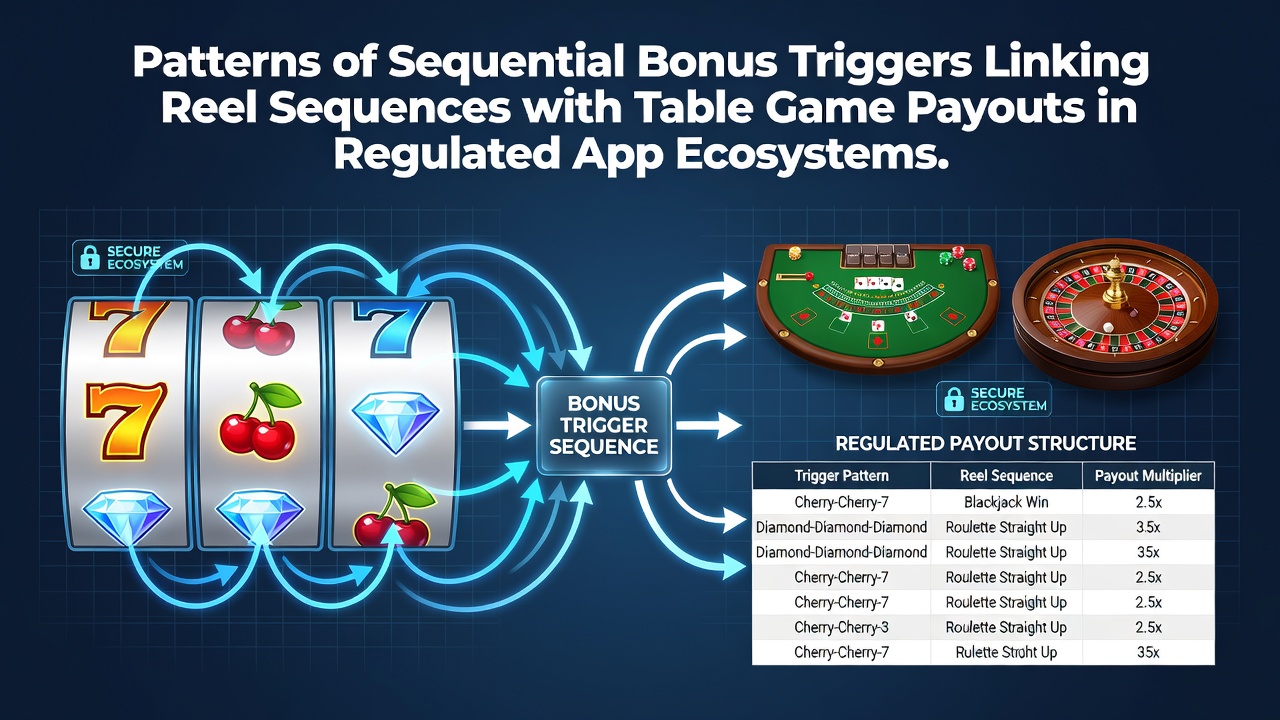
Sequential Patterns in Bonus Triggers Connecting Slot Reels to Table Game Payouts in App-Based Regulated Platforms
Regulated app ecosystems integrate sequential bonus triggers that link reel sequences from slot games directly to payout modifications in table games such as blackjack and roulette, and these connections rely on shared progress trackers that record player actions across game types while maintaining compliance with licensing standards. Data from multiple jurisdictions shows that reel combinations meeting specific thresholds activate chained bonuses, which then adjust multipliers or unlock enhanced payout tables in linked table game sessions, and this process occurs within unified player accounts that aggregate activity across the platform.
Core Mechanisms of Cross-Game Bonus Linkage
Sequential triggers function through algorithmic rules that monitor reel outcomes in real time, and when predefined patterns emerge, such as consecutive high-value symbol alignments, the system initiates a bonus state that carries forward into table game interfaces. Researchers at institutions tracking iGaming behavior have documented how these triggers create cumulative effects where slot-derived credits influence bet sizing options or payout ratios during subsequent card or wheel sessions, and the linkage depends on centralized ledgers that update across game modules without violating separation requirements between random number generators and table logic.
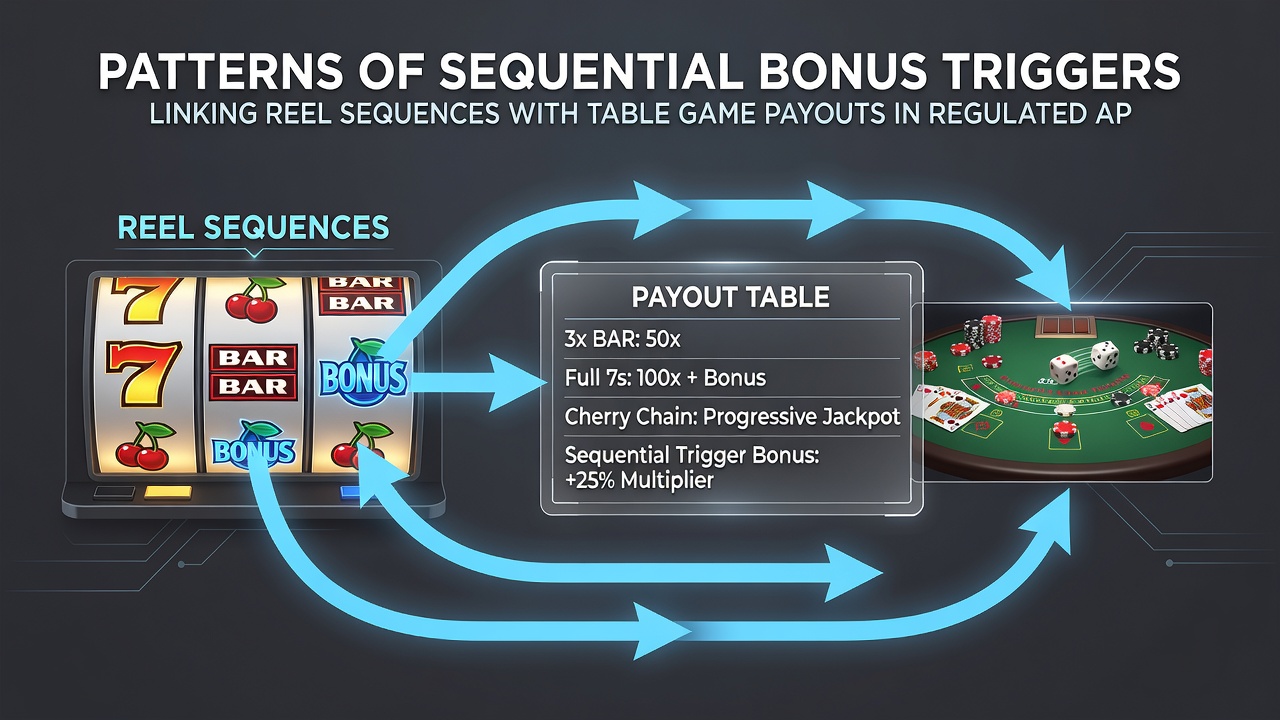
One documented pattern involves a series of three or more bonus-eligible reel spins that accumulate a shared pool, which then applies directly to table game hands by increasing the base payout percentage for a limited number of rounds. Studies conducted by the New Jersey Division of Gaming Enforcement have examined these integration methods and confirm that operators must log each sequential step to ensure transparency and prevent unauthorized alterations to game mathematics. Observers note that the timing between reel sequences and table activations often follows fixed intervals enforced by the app backend, which helps maintain fairness across both game categories.
Regulatory Oversight and Compliance Patterns
Authorities in various regions require detailed reporting on how bonus sequences bridge reel-based and table-based components, and November 2026 marked the rollout of updated reporting protocols in several North American and European markets that mandate timestamped records of every cross-game trigger event. These rules emphasize audit trails that capture the exact reel positions preceding each table game payout adjustment, and operators respond by embedding compliance modules that flag any deviation from approved linkage algorithms.
Evidence from industry reports indicates that platforms operating under multiple licenses synchronize their bonus engines to align with the strictest applicable standards, which reduces discrepancies when players move between reel and table sections. The Australian Institute of Criminology has published analyses showing measurable increases in tracked sequential events following regulatory updates, and these figures reveal consistent patterns in how reel win frequencies correlate with table game reward spikes within the same session.
Observed Data Trends Across Platforms
Analytics platforms monitoring regulated apps report that sequential triggers appear most frequently during peak evening hours, when players tend to alternate between slot reels and live table interfaces within single sessions. Quantitative reviews demonstrate that certain reel sequences, particularly those involving stacked wilds or scatter accumulations, produce higher rates of subsequent table game payout uplifts, and these uplifts follow predictable distribution curves documented in operator compliance filings.
Those who have examined aggregated telemetry note that the average interval between a triggering reel event and its corresponding table game effect ranges from thirty seconds to two minutes, depending on the specific bonus tier activated. This timing supports seamless transitions while preserving the independent operation of each game type, and regulatory frameworks continue to evolve around these measured intervals to ensure player protections remain intact.
Conclusion
Patterns of sequential bonus triggers establish measurable connections between reel sequences and table game payouts inside regulated app ecosystems, supported by centralized tracking systems and enforced through jurisdiction-specific reporting mandates. Continued examination of these linkages provides clarity on operational structures that balance innovation with oversight, and ongoing data collection from sources across regions will further define how these mechanisms develop in the coming periods.